Back in business with the third session of Guitar Fail Math 101!
After the Blues Equation and Country Music (Badly) Explained, let’s dive into one crazy territory… Jazz!
You know, that little genre everyone thought was dead… except Frank Zappa, who told us the truth:
“Jazz isn’t dead, it just smells funny.“
Well, we’ve got an equation for jazz that will make you reconsider everything you thought you knew about it.
Trust the math.
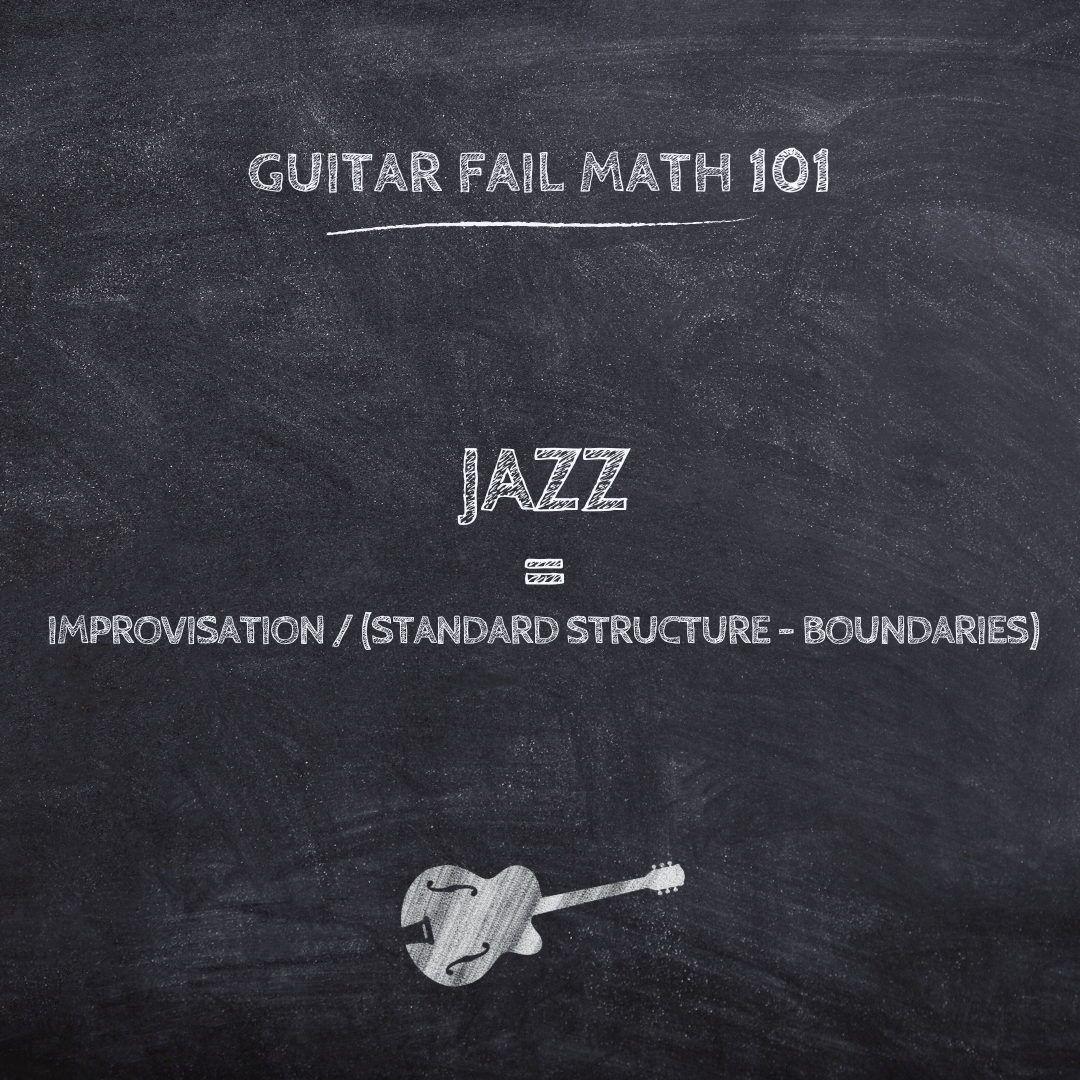
Let’s Break Down the Jazz Equation
Forget all that theory mumbo-jumbo jazz cats keep blurting out! It’s designed to scare the rest of us away… a cunning way to protect their sacred land of complex chords and impossible scales.
But the reality is far less mysterious, my friends…
All you really need for a jazz tune is a massive amount of improvisation, divided by a compound variable made of lack of standard structure and complete disregard for boundaries.
And voilà… you’re playing jazz!
Of course, this formula works with every instrument known to humankind.
However, for guitarists out there, remember one crucial law of jazz physics:
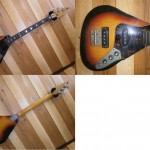
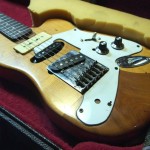
No jazzbox = no jazz credibility.
That’s just science.
Bonus Math Note
After extensive calculations performed on a napkin at 2 a.m. in a smoky basement, we’ve reached the following conclusions:
- If Jazz = Improvisation / (Structure – Boundaries), then the number of possible notes played during a solo is directly proportional to the number of raised eyebrows in the audience.
- Jazz is pure energy, unmeasurable in conventional units. Hence the use of the JzU: 1 Jazz Unit (JzU) = 3.14 bars of improvisation over an undefined key signature.
- If you ever play a wrong note, just call it a tritone substitution and keep a straight face. More raised eyebrows guaranteed!
Now it’s time to practice your jazz chops.
But before you do, remember to:
- Forget the scales.
- Ignore the key signatures.
- Trust the math.
Until next time… Class dismissed.